
Security Risk Doesn’t Come From Questionnaires. It Comes From Real Compromise.
Modern cyber incidents rarely originate from inside the organization. They emerge across the broader ecosystem; compromised vendors, exposed credentials, ransomware attacks, and threat actors distributing stolen data.
Most security programs still rely on posture assessments and questionnaires to evaluate vendor risk. Unfortunately, these methods often fail to detect the threats that actually lead to breaches.
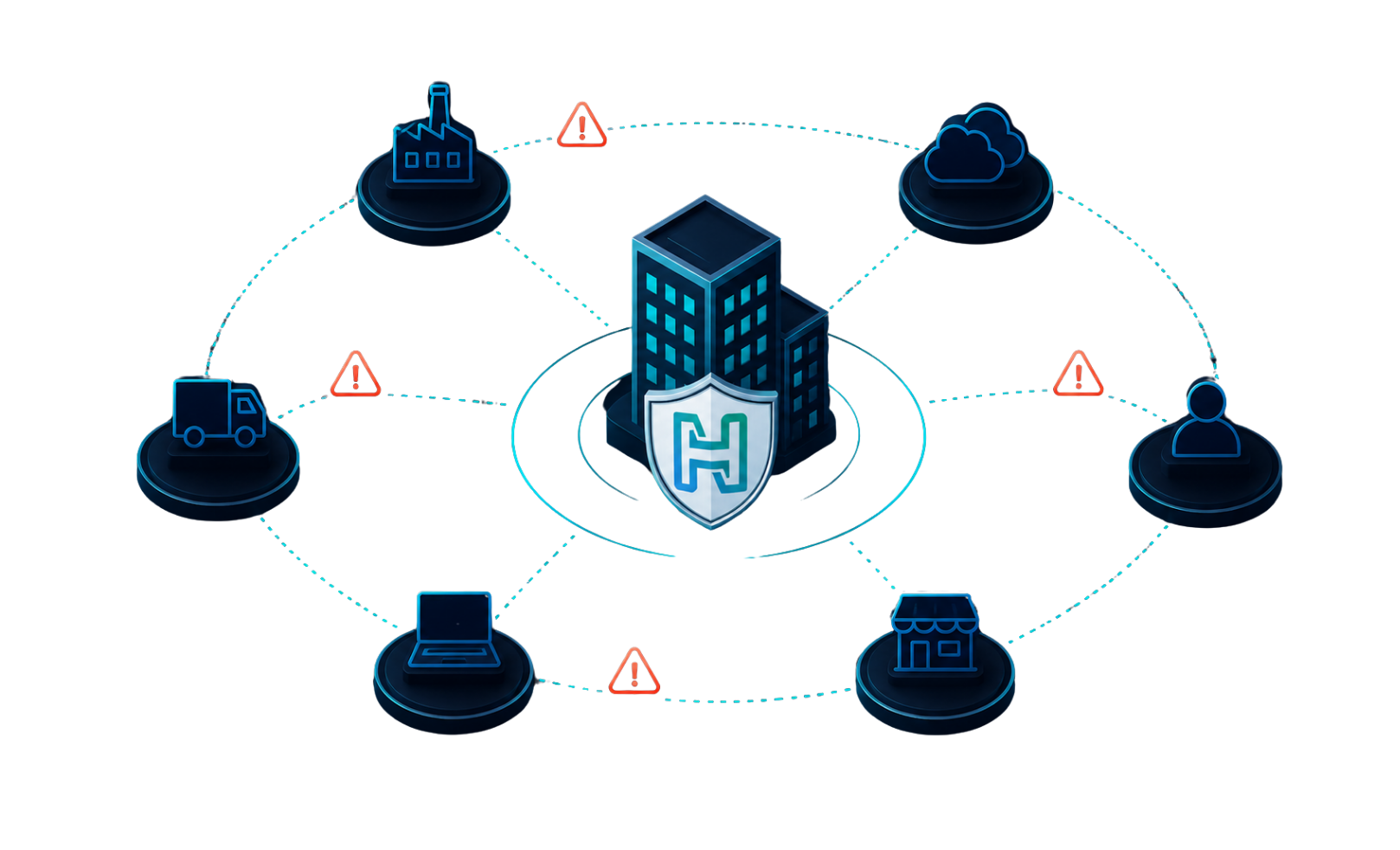
Organizations Are Measuring Risk Instead of
Detecting Compromise
Security teams have invested heavily in tools designed to measure potential risk; vendor questionnaires, security ratings platforms, and periodic compliance assessments.
These approaches may provide useful governance insights, but they rarely reveal when a vendor or organization has already been compromised.
As a result, many third-party incidents are discovered only after attackers have already gained access or data has already been exposed.
Security Ratings and Questionnaires Do Not Reflect Real-World Threat Activity
Security ratings services (SRS) and traditional vendor assessments focus on observable security posture; scanning internet-facing infrastructure and evaluating security controls.
While these signals may indicate potential weaknesses, they do not measure what threat actors are actually doing.
The Majority of Breaches Start With Compromised Credentials
Across nearly every industry, exposed credentials and social engineering remain the most common entry points for attackers.
Stolen passwords from breach datasets and infostealer malware are widely traded across underground communities. Attackers frequently use these credentials to gain access to corporate accounts, VPNs, and SaaS platforms.
When these credentials belong to employees or vendors with access to sensitive systems, the result can quickly escalate into a full security incident.
Ransomware Is the Leading Third-Party Threat
Traditional Dark Web Monitoring Creates Alert Noise
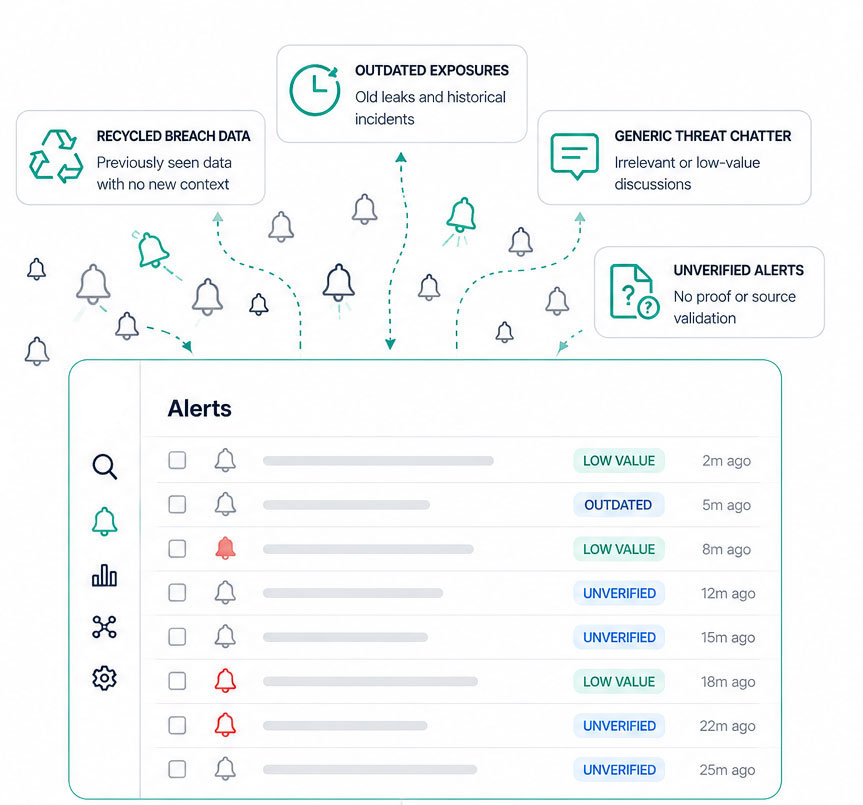
Why Traditional Dark Web Monitoring Falls Short
Many platforms rely on automated scraping of underground sources without validation or contextual analysis. As a result, security teams must sift through large volumes of alerts to determine what actually matters.
Without proper verification and intelligence enrichment, these alerts can overwhelm analysts instead of helping them prioritize real threats
Organizations Need Intelligence Based on Real Adversary Activity
Operational Adversary Intelligence for the Modern Threat Landscape
HackNotice helps organizations move beyond posture-based risk assessments by providing real-time intelligence on adversary activity across their ecosystem.
The platform enables security teams to detect vendor compromise earlier, monitor threat actor activity, and respond quickly when incidents occur.
